










San Valentino Park in Pordenone: work on the first inclusive park in Italy has been completed
Paysage article – Topscape 42
An intertwining of historical and natural values linked to the origins of Pordenone, a city of water and factories, the San Valentino Urban Park is today an inclusive park, where the design of the landscape is the protagonist in creating relationships and emotions accessible to all.
The play area interacts with the landscape because it was designed and not assembled. The measures derived from the world of disability find a new declination and become an opportunity to experience, without realizing it, the advantages of accessibility.
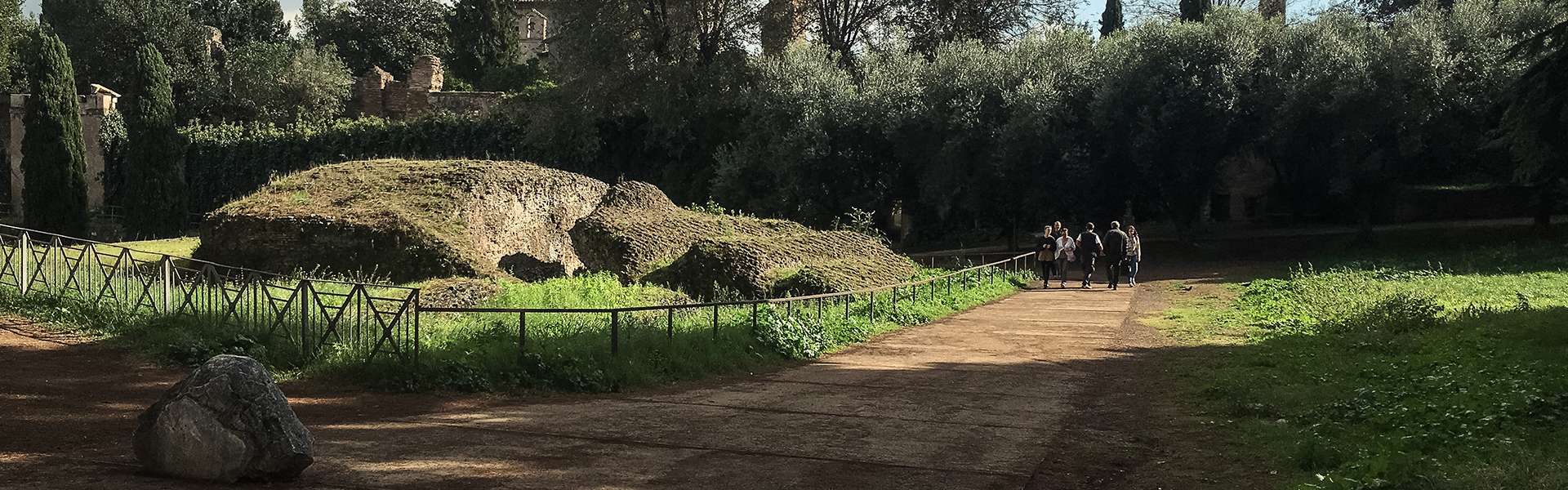
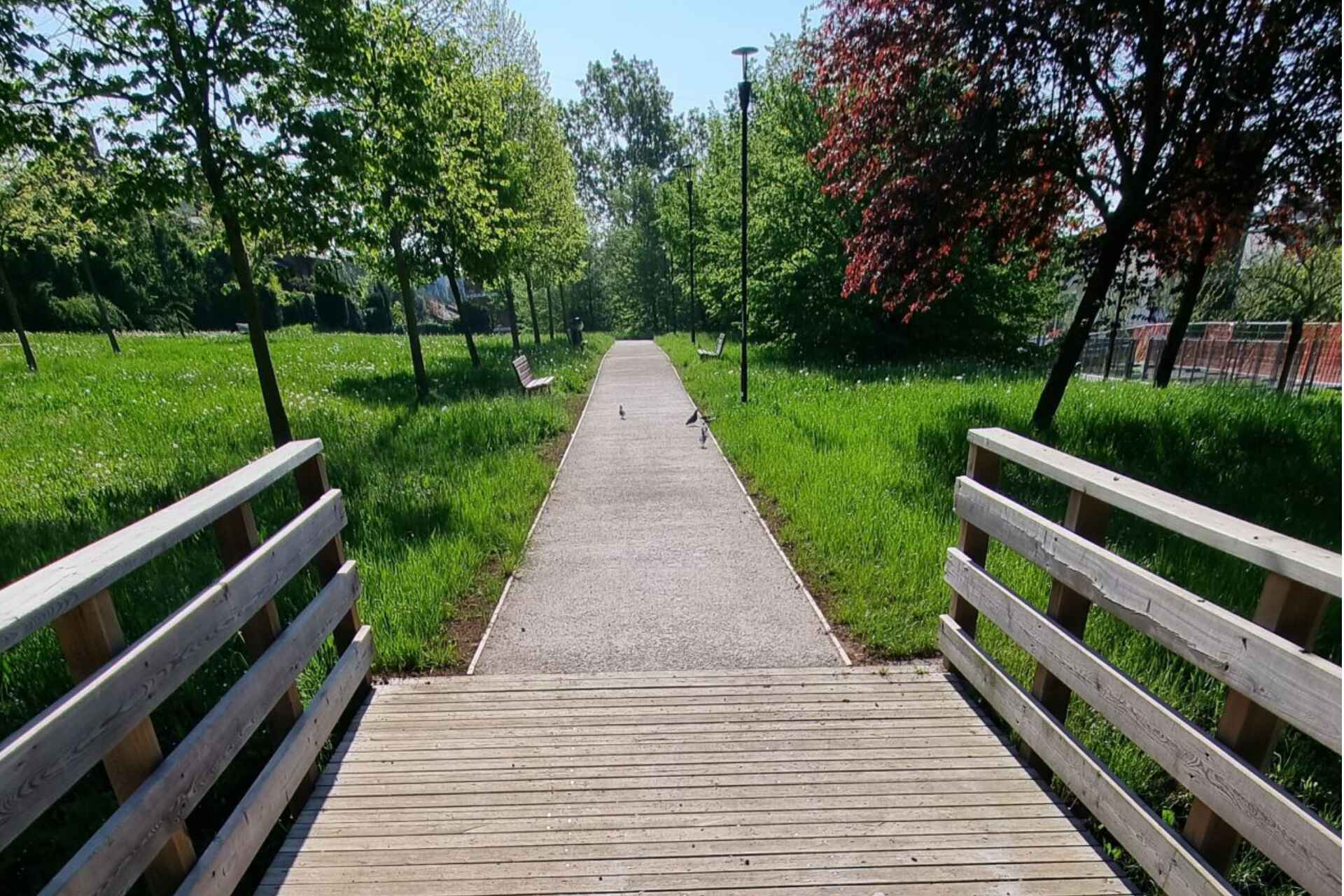
Reading a book in the shade of the trees, watching geese in the water, and playing with other children are experiences available to everyone at the San Valentino Inclusive Park, inaugurated in September 2020 and funded by the Pier Antonio Locatelli Foundation. The design approach is discreet, aimed at enhancing what already exists—the former Galvani paper mill building, San Valentino Lake, the tall trees, the resurgence areas—by connecting experiences that are gradually revealed. Strolling, one discovers a landscape composed of elements that—according to the principles of Universal Design —welcome, accompany, and suggest multiple ways of using the park, appealing equally to children, adults, and the elderly, regardless of individual characteristics determined by age or disability, be it motor, sensory, or cognitive. This is the essence of the inclusive park. The quality of the paths defines the first requirement: for a place to be inclusive, it must obviously first be accessible. In the project, the paths replicate existing routes; Instead, the transverse and longitudinal slopes were re-studied: the latter, accentuated in the section in front of the former paper mill, were resolved by creating routes where flat areas interrupt sections with a constant and contained slope, reaching the 5% limit only in a few short segments.
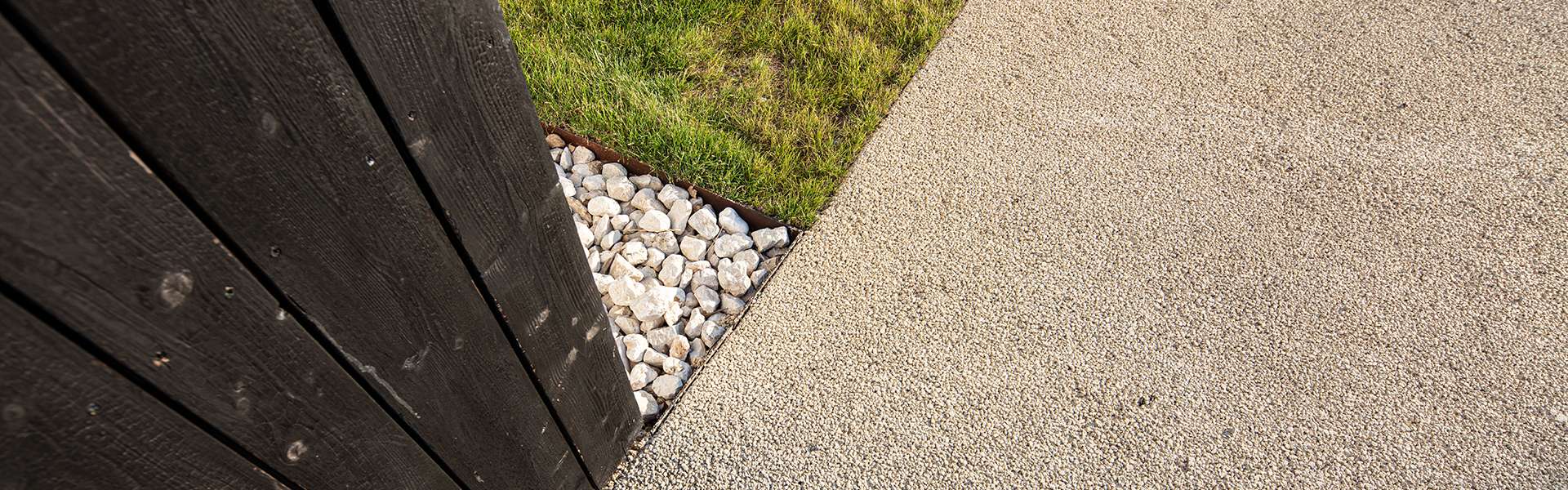
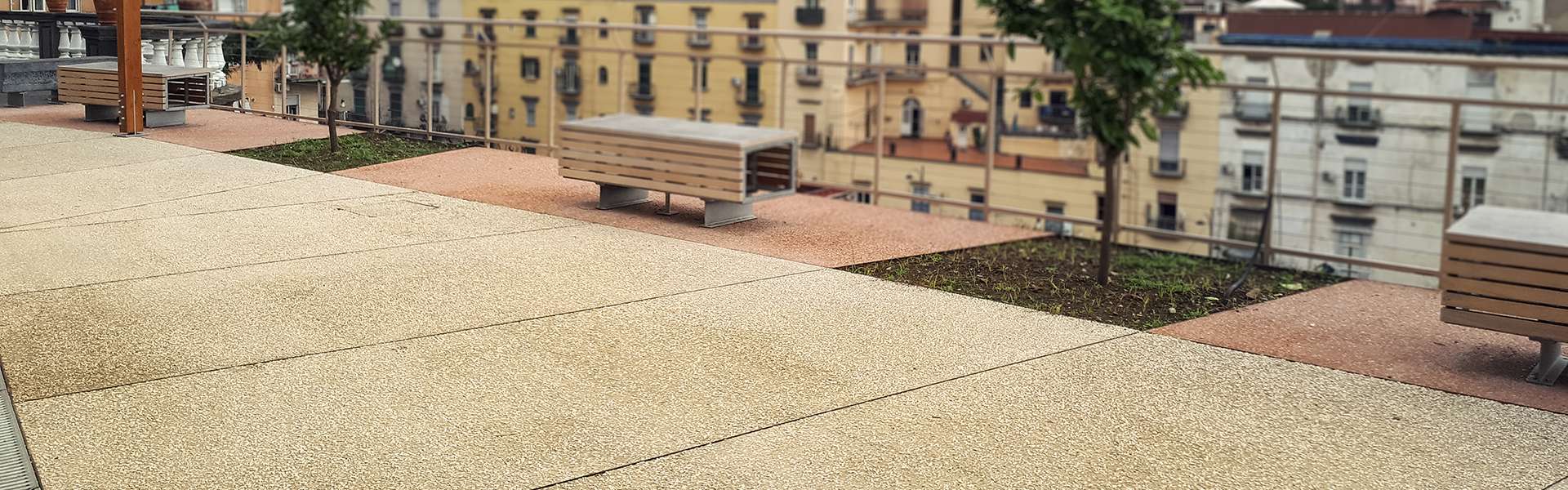
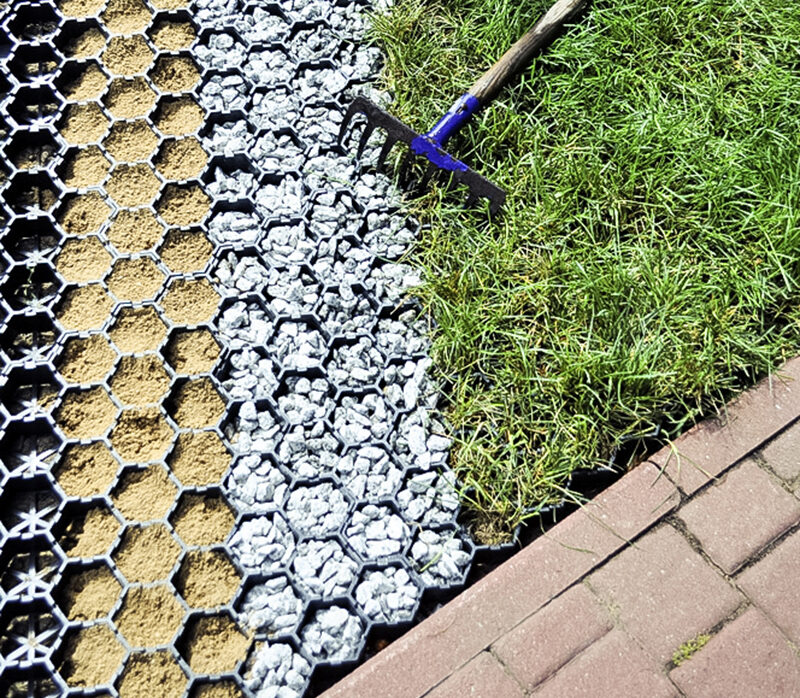
New floors in stabilized Sarone, coming from local quarries, have replaced the loose gravel, resulting in natural-looking but easy-to-walk paths. The environmental communication of the routes is expressed in the integrated natural guide - consisting of the terracotta-colored curb present along the cycle/pedestrian path
– and in the change of material that marks the "outdoor rooms," small seating areas set back from the passageway and surrounded by trees and sky, where the arrangement of benches, of different types, can easily accommodate a stroller or a wheelchair user. Each outdoor room guides the eye to discover one of the park's treasures, such as the gentle shallows with streams of spring water and Carex spp. Chief among the park's treasures is Lake San Valentino, hidden for years by a thick hedge. To rediscover it, a three-level walkway has been installed along its shore, connected by both steps and gentle ramps. From here, visitors can look out over the water, glimpse the historic Villa Poletti-Marchi, observe the lake's fauna, and reach the refreshment area located on the top level, now equipped with a charming refreshment area. In the background, surrounded by treetops, lies the playground.
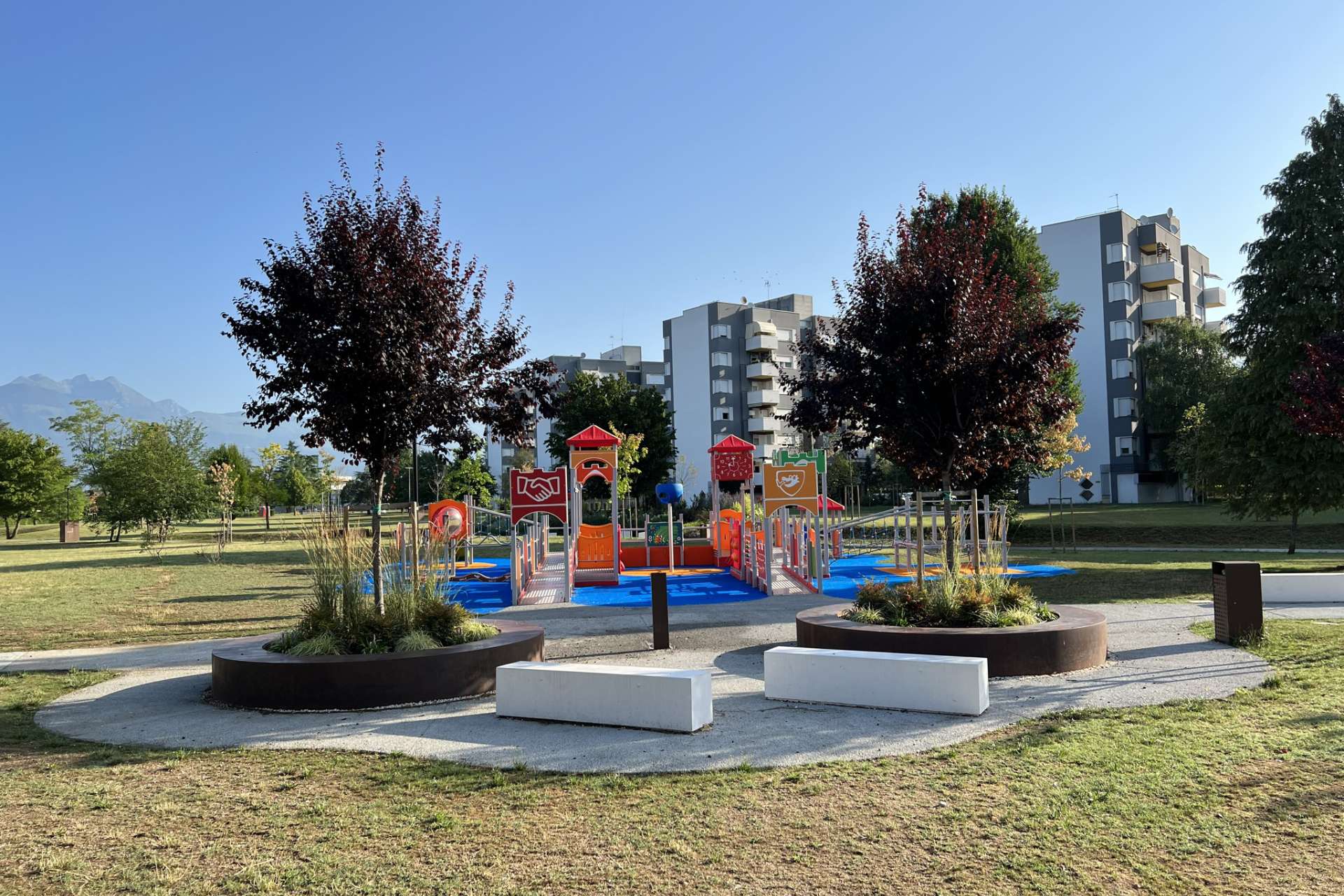
The combination of nature, designed elements, and free-standing play equipment creates a playful landscape to be interpreted, where spontaneous and imaginative play can arise from the settings. In defining the play experiences, the starting point of the project, we chose to prioritize group play, exploring solutions for children with disabilities: children can invent their own games and overcome small and large challenges with the help of their parents, with friends, or alone. The colorful surfaces of the paving fold into soft benches that surround and protect, becoming volumes with heights to be conquered in different ways—by climbing, ascending the ladder, or walking down the ramp. Surfaces and volumes are a landscape that becomes a narrative, inspired by the history of the site and the former paper mill. In the inclusive playground, discovery and knowledge through play are available to everyone and are also achieved through the senses: manipulating the sand, peeking through the peephole, crawling through the tunnel , caressing the grassy fabrics, feeling different materials underfoot, drawing with chalk, steering the bucket, getting wet with the water spray, holding the leaves of the "baby" maple with your hand, discovering the map of the park and its history through touch, sight, or hearing.
Landscapers Francesco Casola, Erica Gaiatto – Global Project Inclusive Architecture
Graduated in Architecture from the IUAV University of Venice, they launched their studio in 2004, immediately becoming fascinated by accessible design. Designing barrier-free and inclusive public and private spaces, and personally overseeing their implementation on site, has led the studio to a concrete specialization, constantly enriched by discussions with stakeholders . The studio consults for public and private entities on accessibility issues.