


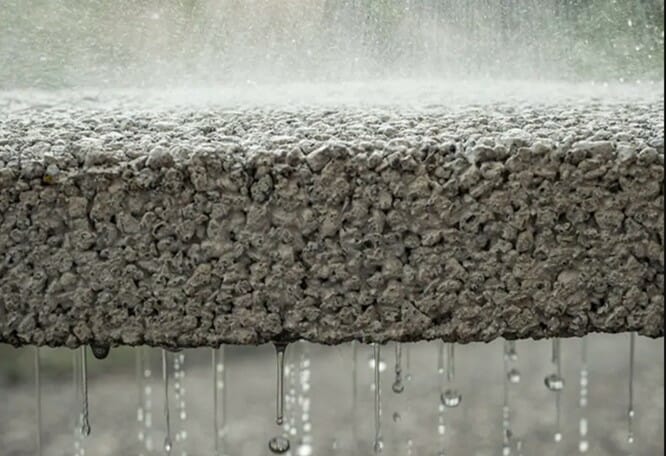
create a draining road in a workmanlike manner there are many factors to take into consideration. Factors that grow considerably if you want to create a road that is also ecological, as well as permeable.
In cases like these it will be necessary, first of all, to define exactly what is meant by draining and ecological flooring, what are the best materials to make them and how to make a road of this type. Let's find out together.
Ecological and draining flooring: what they are
When we talk about draining and ecological roads we are referring to paving, created in public parks, in the countryside but also in the home garden, which guarantees a high level of permeability and compliance with precise environmental standards. In particular, the materials used during the installation phase must not release substances into the ground that could pollute the environment and compromise the underlying aquifers.
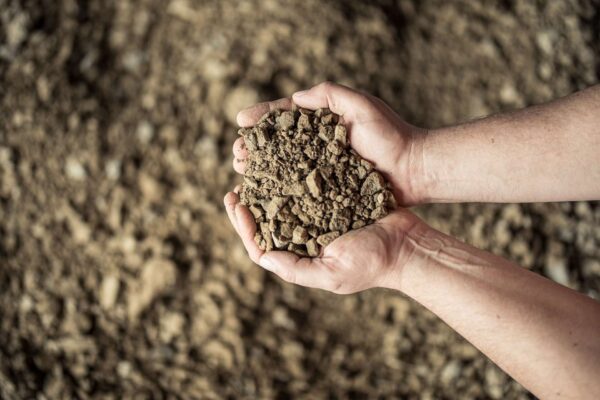
At the same time, ecological flooring must be made with materials which, at the end of their life cycle, they should be able to be recycled and reused, rather than being disposed of as special waste in landfill. They must therefore comply with stringent European directives and existing Italian laws on recycled aggregates from demolition, so that they can be used on construction sites in absolute safety. In short, a proof flooring The circular economy.
The developments recorded over the last few years in the field of building materials have made it possible to achieve new techniques and new blends which respond perfectly to these needs. At the same time, construction techniques already used have also undergone an evolutionary process which has led to the replacement of old materials with a high environmental impact with decidedly more eco-sustainable ones.
Draining and ecological floors in stabilized earth: advantages
Stabilized earth is a solution”hi-tech” to create a draining road with full respect for the surrounding environment. Characteristics that make this material ideal for maintenance work on dirt and country roads or for the construction of avenues within areas subject to landscape restrictions.
To create a stabilized earth flooring it is in fact possible to use quarry materials and aggregates from demolition to create the earthy substrate, while the conglomerate can be made by mixing the stabilizer and earthy agglomerate already present on site. This allows us to reduce both the use of "virgin" raw materials and the CO2 emissions resulting from the transport of the materials themselves.
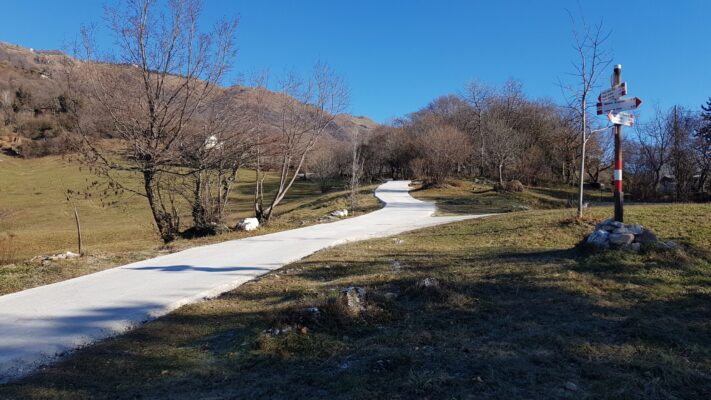
The use of eco-friendly stabilizers and binders (such as those of Nature Stabil Road line by Terra Solida Italia) ensures that there are no problems of any kind for the environment. At the end of its life cycle, the flooring can be recycled and reused and will not have to be disposed of as special waste in landfill.
La installation of stabilized land it is another of the great advantages that this material guarantees compared to alternative solutions. Building a road in stabilized earth requires significantly less time: in fact, only a handful of days can pass between the opening and closing of the construction site and the paving appears to be immediately accessible to vehicles.
This means that the maintenance work on a dirt road or the construction of a cycle path or pedestrian walkway in a park will be reduced to the bare minimum.
Draining flooring at home: why choose the lawn-saving grid
If, however, you want to make private land accessible to vehicles, the most effective and aesthetically pleasing solution is without a doubt the lawn guard. The so-called reinforced lawn allows you to create a driveway surface in a short time and with low installation costs. Above all, it allows you to keep the turf intact, without it being necessary to remove portions of the lawn.
A draining surface created with the use of lawn protection grids guarantees a high level of permeability and is able to support the transit of vehicles and vehicles of all sizes. Ideal, therefore, for creating an access driveway to the home garden or for transforming a lawn into a car park without having to worry about the formation of puddles, stagnant water and mud.
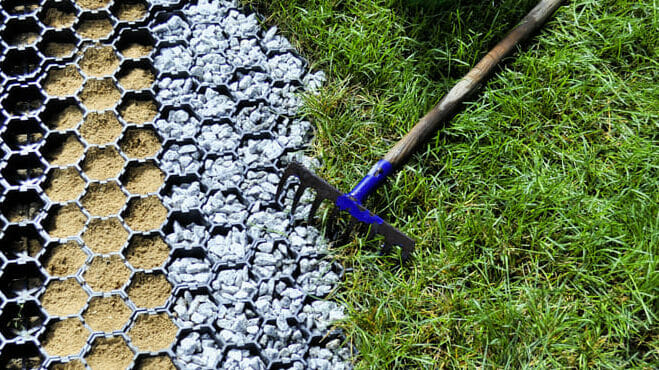
Solutions like Garden Grid by Terra Solida Italia they also wink at the environment and eco-sustainability thanks to the use of recyclable and recycled materials. The honeycomb mesh necessary to give strength and stability to the ground is in fact made with plastic materials from renewable sources. This, combined with the use of recycled aggregates and quarry stabilized to create the draining substrate, allows you to create a draining floor that fully respects the environment.
As already mentioned, then, the armed lawn does not require the removal of portions of turf as happens instead with alternative solutions. After having excavated the draining foundation and placed the honeycomb grid, it will be possible to proceed with the planting of a new turf. Within 2 or 3 weeks, the newly created driveway or parking lot will be perfectly "camouflaged" with the surrounding lawn, for a priceless visual and aesthetic effect.

Pingback: Stabilizer for dirt roads: what it is and how it works